Wait! What? There’s plastic in Teabags?
Yes! That’s right! Teabags can contain plastic. It may only be trace amounts but nevertheless, for decades the average tea drinker has unknowingly been polluting the environment each and every time a teabag is disposed of. However, fear not in recent years a lot of new up-and-coming brands have lead the resistance and pushed the tea market down the plastic-free path.
There are now plenty of ‘Plastic-Free’ options conveniently available. Here’s our guide to help you understand the truth about Plastic-Free Tea and how to choose the best bag
Brits alone drink more than 100 million cups of tea a day and now we know our tea has contained traces of plastic all this time, we can get a sense of the plastic problem our tea-drinking obsession presents for the environment
Table of Contents
Plastic in your tea. Why and where?
Until recently the vast majority of tea bags contained small amounts of polypropylene woven into the fiber of the bag itself. Polypropylene is the most common type of plastic used throughout all forms of manufacturing and industry. It is a petroleum-based plastic and we all know how damaging the use of fossil fuels can be for the environment, and how important it is that we find alternative resources to reduce our reliance on these fossil fuels

When it comes to the humble teabag the vast majority of people are quite surprised to discover that there is some plastic content. After all, we naturally assume a teabag is as simple as it looks. A paper bag with tea leaves inside. You would also be forgiven for thinking that something so basic as a paper bag of tea leaves can surely be thrown in the home compost pile. Wrong I’m afraid. And here’s why…
Teabags are indeed a paper bag with leaves inside. However, the manufacturing process requires the paper bag to be sealed once filled with the leaves. It is for this sealing process where the Plastic is woven into the fabric of the bag itself. As the bag is heat-sealed the plastic melts to act as an adhesive. In theory, if you were to compost your teabags, the bag and leaves would of course over time break down to form organic, natural matter. However, the material would be contaminated with traces of Polypropylene.

Teabags are indeed a paper bag with leaves inside. However, the manufacturing process requires the paper bag to be sealed once filled with the leaves. It is for this sealing process where the Plastic is woven into the fabric of the bag itself. As the bag is heat-sealed the plastic melts to act as an adhesive. In theory, if you were to compost your teabags, the bag and leaves would of course over time break down to form organic, natural matter. However, the material would be contaminated with traces of Polypropene.


But it’s only a little bit of Plastic
There are two consequences of teabags containing plastic. The manufacturing process itself is environmentally damaging. The plastic first of all has to be created, starting with the extraction of fossil fuels from the ground. And we are now aware of the secondary issue which is the disposing of the teabags themselves and how traces of Polypropylene will be left in landfill or composting facilities, contaminating the ground itself and potentially finding its way into our oceans
It’s really quite bizarre to think how a simple cup of tea requires us to question our moral principles towards the environment and economics of tea production.
Quite frankly these days the buck really should stop with the manufacturers. The technology and manufacturing capability now exist where all Tea can be ‘Plastic-Free’ and Biodegradable and or at least commercially compostable. Tea should also be sold in plastic-free packaging, with no unnecessary and excess materials such as tags and strings, and equally important provide the producers of the Tea at every step of the production process with a fair income.
Which brands are doing it best when it comes to Plastic Free Tea?
It’s important to have an understanding of some of the language being used by manufacturers as they talk about their Tea. Without this, the humble cup of tea can become surprisingly confusing.
Here’s the key phrases and language we need to understand when considering our choice of tea
“Plastic-Free” – The Plastic-Free status was first awarded to Tea-Pigs and quickly became the Buzz word surrounding Tea Production. However, this is somewhat misleading. Most Plastic-Free teas, including TeaPigs are indeed free from traditional Petroleum-based plastics, however, they do still use what I referred to as Bio-Plastic. This PLA is a considerably better alternative for the environment, but it is still a Plastic of sorts. It will Biodegrade into natural matter under commercially accessible composting conditions.
PLA – Polylactic acid is a Bio-Plastic created from the sugars found in corn starch and sugarcane
Soilin – This is a trademarked name for a mesh created from PLA. This mesh-like structure has been utilised for creating some brands of Teabags
Natureflex – is a bio-based clear packaging film. It is derived from natural sources such as wood pulp. It is therefore fully compostable at home.
Bleaching – when it comes to tea and the mention of ‘bleaching’, the industry is referring to the colour of the Teabag itself. Traditional materials and manufacturing techniques would result in a teabag with a more Natural, earth appearance with a definite off-white colour. At some point, the industry concluded that our Teabags should be whiter than white and bleaching became part of the manufacturing process to achieve this. Chlorine-bleaching would have been widely used at one time as the preferred method but this of course is a process riddled with nasty, potentially harmful chemicals. Oxygen bleaching is now used as an alternative to chlorine. This does indeed sound better but is any form of bleaching really necessary? Afterall, Teabags are tea-stained the instant they get wet
Biodegradable & Compostable
Biodegradable refers to the disintegration of something into natural elements such as carbon and water vapour due to biological processes, bacteria and fungi. Even plastics are technically biodegradable, however, most will take hundreds of years to biodegrade and will leave behind trace elements of harmful, contaminating chemicals.
Biodegradables must be processed and disposed of correctly to avoid contaminating the environment.
Compostable materials are materials that under the right conditions will break down completely into non-toxic components such as water, carbon dioxide, and biomass. This Biomass is then typically used as nutrient-rich compost. Composting is the recycling of organic waste for reuse
All compostable items are biodegradable, but not all biodegradable products are compostable.
As you can see Tea can be far more complicated than you ever imagined. With so many technical considerations, how easy is it to find the most environmentally friendly Teabag? Below is our list of the best contenders and some of the worst offenders
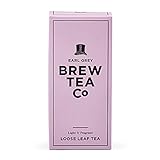
Brew Tea Co

Commercially compostable via your home food waste bin
Brew Tea – based in Manchester, uses whole leaves (not dust) and is a member of the Ethical Tea Partnership which supports small estate growers.
All the tea bags from the brand are made from corn starch PLA, the inner lining is made from NatureFlex. Inside the box is a card explaining what all the packaging is made from and how it should be recycled. The teabags and inner lining will decompose in 45 days via your council food recycling bin and the outer box goes into the paper recycling. They come in recyclable boxes and all the brand’s packaging is completely free of plastic


Hampstead Tea

Home compostable or can go in your food waste bin
Hampstead Tea is one of the few Teas that ticks all the boxes when it comes to sustainability. Its products are 100% organic, biodynamic, fair trade and unbleached. The tea pyramids themselves are made from GM-free sugar starch and are stitched, not glued, and are therefore fully compostable at home.
There are no unnecessary materials such as strings, tags or labels to complicate the composting process and they claim that a tea bag will turn into compost in 91 days. The internal packaging is made from NatureFlex which is fully compostable at home


Neal’s Yard

Home compostable or can go in your food waste bin
Neal’s Yard 100% organic tea bags are Internationally recognised FairWild™ certified. This ensures a fair deal all along the supply chain.
Their PLA-free teabags are made from natural abaca (a plant from the banana family) and are oxygen bleached. The chlorine-free method that is kind to the environment.
The Sachets and cartons are made of recyclable paper and card. The Teabags are biodegradable, compostable, unbleached and stitched with organic cotton, making them perfect to pop in your home compost or food waste recycling bin


Clipper

Commercially compostable via your home food waste bin
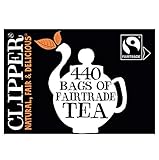
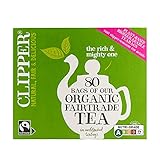
A great effort from Clipper when it comes to their sustainability and environmentally friendly credentials. Each of their bags is unbleached, organic, Fairtrade, plastic-free, and non-GM. Clipper was the world’s first Fairtrade tea. The teabag is made from abaca plants – a type of banana – and the plastic that once sealed the bag has been replaced with a non-GM plant-based PLA. Clipper has ticked many boxes with its teabag, but still needs to improve on making its internal foil packaging recyclable

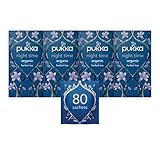
Pukka

Home compostable or can go in your food waste bin
Pukka makes organic and fairly sourced herbal teas. Their string and tag teabags have always been plastic and PLA-free. Every Pukka Teabag now comes in its own fully recyclable envelope
The bag can go straight on your home compost pile or food waste bin and the packaging is widely recycled with your local collection


Tea Pigs

Commercially compostable via your home food waste bin
Teapigs was the first brand to receive the world’s first plastic-free trust mark. Tea Pigs biodegradable bags are made from corn starch PLA and the paper tags use vegetable inks, which are non-toxic. Even the clear “plastic” inner bag is home compostable, made from NatureFlex.
The bags need to go in your home food recycling bin to be taken away from industrial processing


The Best of the rest
The majority of all major Tea Brands now offer a “plastic-free” option. However, as we now know this doesn’t quite tell the whole story. The list below is comprised of those brands that have taken some great steps to improve their environmental credentials but are still falling a little short when it comes to 100% plastic-free or where there is unnecessary reliance on commercial composting facilities.
There is an abundance of Tea companies that can comfortably claim to provide a Plant-based product but few that can claim to be 100% plastic-free.
It’s a good thing that since 2020 the rules have changed relating to how companies should talk about their products. All tea companies that use the Bio-Plastic PLA should refer to this is as Plant-based and biodegradable rather than plastic-free.
PG Tips
are now fully biodegradable. The bag can be placed in your food waste bin for industrial composting. The packaging is plastic-free and is widely recycled at home.


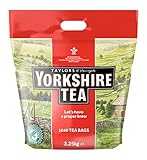
Yorkshire Tea
are in the process of switching from oil-based plastic to plant-based PLA, to bring their product in line with so many of the other brands. It’s a shame they appear to have been slow to react. However they do remain as one of the top 3 tea brands in the UK, so any action is very welcome and will have a dramatic effect on reducing the amount of plastic entering the environment


Twinings

In recent years Twinings has been the UK’s top-selling Tea. Therefore it is right to assume that if we are drinking more Twinings than any other brand, it is most important that their Environmental credentials are the very best. However, this is certainly not the case. Their website highlights how they are currently making efforts to reduce the number of plastics in their products and expect to transition to a fully plant-based bag in 2021. They also acknowledge that some of their packagings can be improved and strive to improve in this area too
We support the principle of Remove, Reduce, Recycle and Reuse and believe that, whilst there is currently an important role for some types of plastic to help package and protect our teas, we should ensure we are using the right packaging materials, in the right way, as part of a ‘circular’ economy
The worst offenders
Tetley

Neither their teabags nor packaging are currently plastic-free. Tetley continues to make Teabags in the traditional method, with a small proportion of plastic woven into the bag for sealing purposes.
Tetley claims that around 1% of the bag is plastic. This may seem insignificant, however, it is this 1% that prevents the bag from being compostable or safely biodegradable.
Tetley’s packaging now uses significantly less plastic than before and is predominantly paper-based. However, this paper has a plastic coating which prevents it from being recycled.
Their ambition is to play catch up with other brands by 2025 and move to plant-based PLA for their bags and recyclable, plastic-free packaging. This really isn’t good enough though. How did one of the UK’s biggest Tea Brands fall so far behind when it comes to innovation. By the time 2025 comes around we hope that the goalposts will have moved even further, meaning Tetley remain out of touch

Typhoo appears to be progressing at a very similar rate to Tetley. Lagging behind the majority of the other brands with regard to moving to more sustainable, environmentally friendly versions of their Teabags and their packaging
In Conclusion
Both Pukka and Clipper appear to be doing a very decent job when it comes to reducing the environmental impact of their Tea. Both brands are widely available in local supermarkets and online marketplaces, making access to Plastic-Free Tea available for us all.
The very best brand at this time would have to be Hampstead Tea. Their bags and packaging tick all the boxes for anyone looking for the definitive Plastic-Free Teabag
Is there a better option when it comes to Plastic-Free, Environmentally Friendly Tea?
Loose Leaf Tea – more information COMING SOON
Best Selling Loose Leaf Tea


Best Selling Tea Infusers